A polished character screen is only one part of evaluating a UI template. The useful questions are what you can change, how the screens connect, which dependencies you need, and which game systems you still have to build. Here is a practical way to read the scope of our Stellar JRPG UI template.
Look for a connected interface
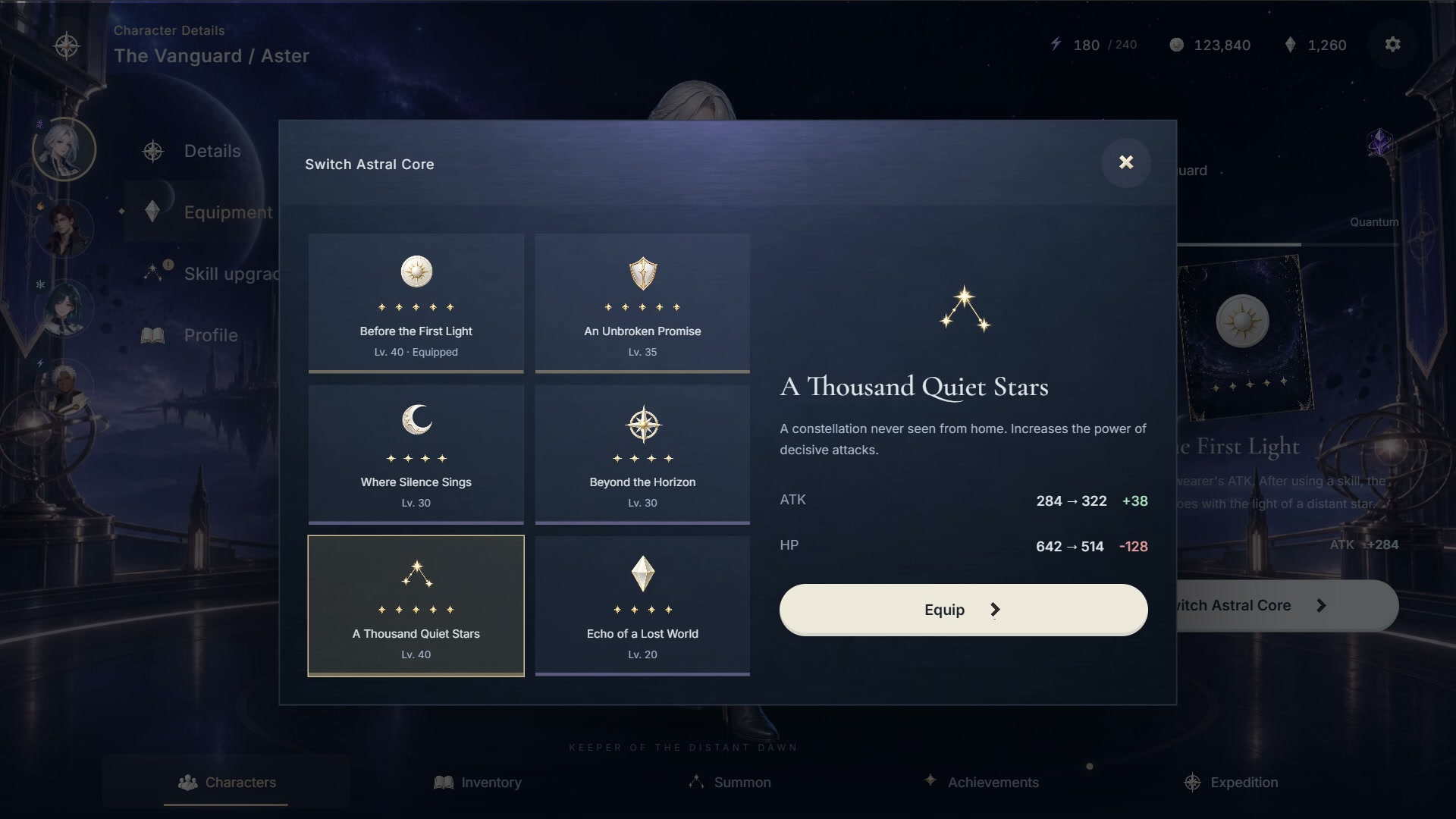
A character screen should connect to equipment, formation, inventory and rewards. The value of a template is not only the individual screens, but the interaction between them. Compare the actual sample screens and follow how a player's choice changes the interface.
The Stellar template includes editable React source and original artwork for its JRPG interface. Character collection, enhancement, equipment, formation, inventory, achievements, shop, summoning, expedition, battle presentation, rewards and settings are part of that scope.
Check what belongs to your project
An editable template should make the working copy clear. Setup prepares the buyer's UI source so layout, styles and artwork can be adapted for a different game. Follow the instructions delivered with the purchased version rather than a development-only path.
For the delivered 1.0.1 archive, the Stellar copy is under Assets/CharacterRpgUIUser/Overlay/stellar. This versioned detail matters because changing the distribution does not automatically migrate a buyer's customized files.
A UI sample is not a production backend
The template supplies a connected interface and offline sample logic. It does not supply your production backend, account system, real-money payment implementation or multiplayer service. The offline sample is not validation of a commercial game economy or a complete combat engine.
ReLayer 1.1.9 or later is required separately and is not included in the template. Check the product's current requirements and the installation guide before importing, including the recorded Unity baselines and the Node.js environment used to build the interface.
Choose by the work you need to save
Use a template when its interface and editable source are close to the experience you want to build. Keep the game-specific state, rules and connected services in your own project. That gives the template a clear job: a starting point for the interface, with a scope you can evaluate.