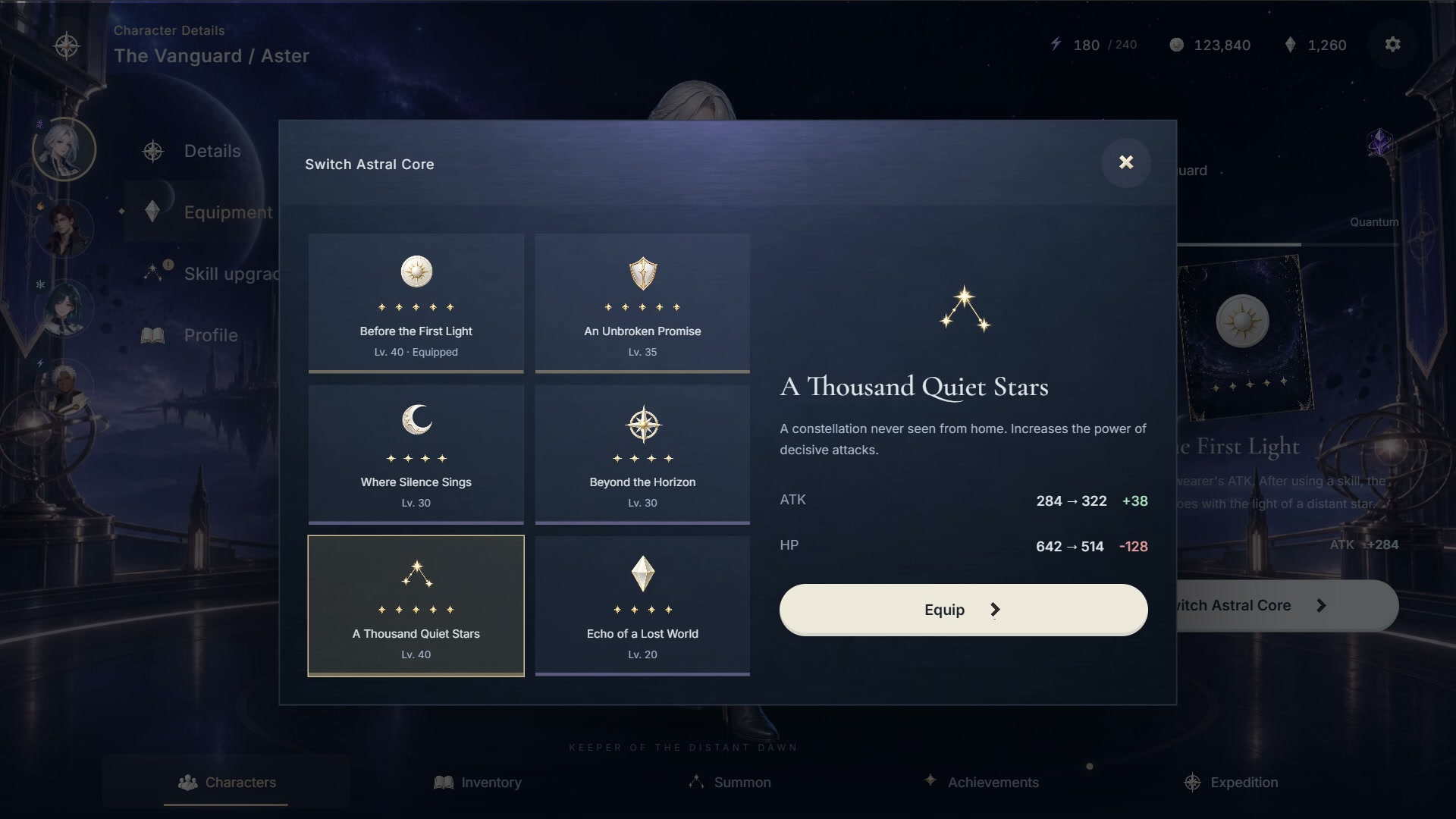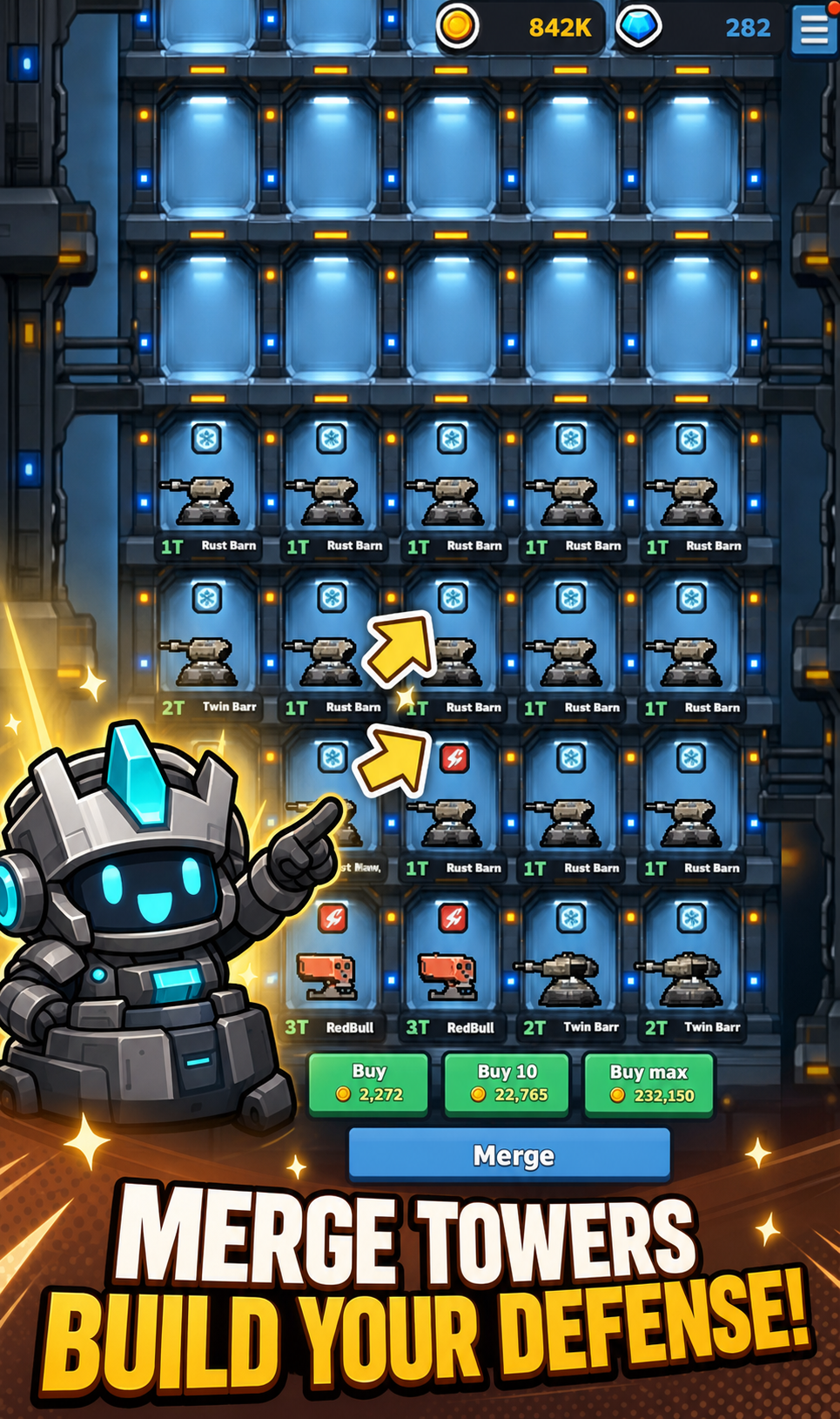
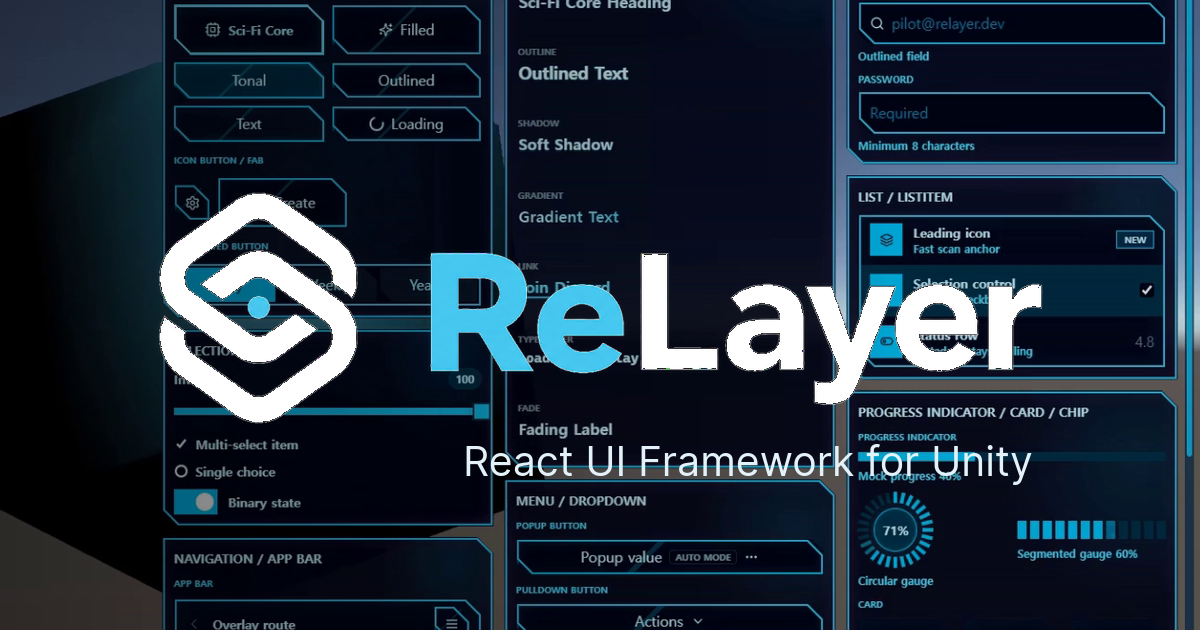
ReLayer is a Unity asset for implementing Unity UI with React. Use React components and styles to build the interface; Unity continues to own the scenes, gameplay and game state. The UI sends actions to Unity and displays the state returned by the game.
One game state, two different jobs
Unity owns the game state. React displays the interface and sends explicit intent back through ReLayer. An inventory button asks the game to perform an action; it does not become a second authority for the player's inventory.
This boundary also makes feedback easier to understand. The interface can show the current state and a pending action, then display the result returned by the game. A button press alone is not proof that a purchase, reward or equipment change succeeded.
Edit your source, rebuild the interface
ReLayer separates editable project source from generated player output. Layout, styles and presentation can change in the React application. Rebuilding the overlay creates the output used by the player; editing generated files is not a durable authoring workflow.
Keep the actual project's instructions beside the source. A framework starter and a purchased template can use different editable roots. The template's setup-generated copy belongs to its buyer, and its documented version determines the correct path.
An interface update has a scope
Player UI delivery can replace interface content, but it cannot update C# or native functionality. A new visual arrangement and a new game capability are different changes. Plan the game-side action before presenting it as a working interface control.
Test the real connection after changing a screen: send the action, observe the game-owned result, and check how the interface behaves when the action is unavailable. The same discipline applies whether the interface comes from a local build or a supported delivery mode.
Choose a workflow before choosing a screen
Start with the interaction you need to build and the state it reads. Then decide whether a blank ReLayer app or an editable UI template is the better starting point. Real project screens and the sample's scope help you evaluate that choice more reliably than a feature list alone.